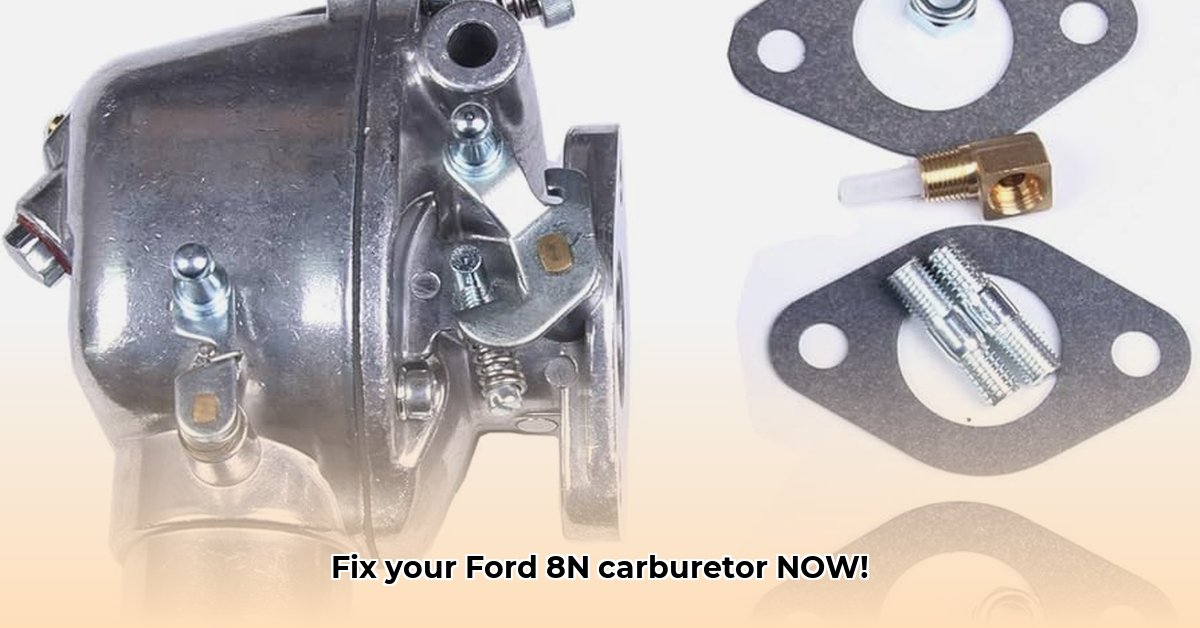
Identifying Your 8N's Carburetor: Marvel-Schebler or Zenith?
Knowing your carburetor type—Marvel-Schebler (often a TSX series) or Zenith—is the first step to fixing it. This seemingly simple step is crucial for selecting the correct replacement parts and repair methods. Have you ever tried fitting a square peg in a round hole? The same principle applies here. The wrong parts mean more headaches down the line. For more information on your 8N's transmission, check out this helpful resource: Transmission Oil Guide.
How to Identify Your Carburetor:
Visual Inspection: Examine the carburetor carefully for markings stamped or cast into the metal. These markings, often including the manufacturer's name and model number, can help you nail it down. Online images of known Marvel-Schebler and Zenith carburetors provide invaluable visual comparison.
Engine Displacement: The engine size (134 CID or 172 CID), usually stamped on the engine block, offers another crucial clue. This helps narrow down the carburetor type originally installed.
Part Numbers: If you can locate any part numbers on the carburetor, use those to cross-reference in parts catalogs or online databases. This is the most accurate method of confirmation. Remember, a correct part number guarantees a perfect fit. Saving money on a less-than-perfect part often leads to more expensive repairs.
Troubleshooting Common Carburetor Problems
Is your 8N Ford tractor struggling to start, stalling, or running rough? These symptoms often point to carburetor issues. Let's troubleshoot:
Hard Starting: A hard-to-start tractor suggests several possibilities. Firstly, check your fuel supply—is your tank full, and is the fuel filter clean? A clogged filter drastically restricts fuel flow, making starting nearly impossible. Also, inspect your spark—a weak spark complicates starting considerably. Last, a partially blocked carburetor can impede fuel delivery.
Stalling: Sudden stalling often indicates a clogged idle jet, preventing sufficient fuel at idle speed. Alternatively, check for vacuum leaks in the system that disrupt the air-fuel mixture. These leaks can cause erratic engine performance.
Running Rich or Lean: A rich-running engine (indicated by black exhaust smoke) points to a float level problem or fuel system leaks. Conversely, if the engine is running lean (misfiring, hesitating), it might lack fuel due to a clogged jet or low fuel level. These telltale signs provide crucial direction in your troubleshooting process. Ignoring them often leads to further complications. Did you know that 80% of Ford 8N carburetor problems stem from these three common issues?
Basic Carburetor Maintenance: A Step-by-Step Guide
Regular maintenance is essential for a healthy carburetor. These steps increase your tractor's operational lifespan and prevent costly repairs.
Careful Disassembly: Gently remove the carburetor from the engine, taking care not to damage any components.
Thorough Cleaning: Using a quality carburetor cleaner and compressed air, thoroughly clean every part of the carburetor, particularly the jets and passages.
Inspection: Look for wear, cracks, or damage. Replace any worn or damaged components.
Reassembly: Carefully reassemble the carburetor, ensuring all parts are in place. Taking photos during disassembly is advisable for accurate reassembly.
Float Level Adjustment: Precise float level adjustment is critical for correct fuel delivery. Consult your 8N's repair manual for specific settings.
Reinstallation: Re-attach the carburetor to the engine, double-checking the tightness and security of all connections. Improper reassembly is one of the leading causes of problems. This meticulous approach will prevent future issues.
Repairing or Replacing Your Carburetor: Advanced Techniques
For more significant problems, you might need a rebuild or replacement. Remember to disconnect the battery before commencing any repair work.
Repair Manual Guidance: A reliable repair manual provides detailed step-by-step instructions and diagrams for carburetor repair.
Sourcing Parts: Carefully cross-reference part numbers. Original Equipment Manufacturer (OEM) parts are often higher quality but more costly, while aftermarket parts may provide a budget-friendly alternative (but always ensure good quality).
Rebuild vs. Replacement: Assess the carburetor's condition. A rebuild kit is more economical for minor wear, while a complete replacement is necessary for extensive damage.
Additional Resources and Helpful Hints
Numerous resources are available online and in print. Explore online forums dedicated to Ford 8N tractors for advice from experienced owners and mechanics. Many parts suppliers also offer detailed diagrams and catalogs online.
Remember, patience and attention to detail are vital. Successful carburetor maintenance and repair ensure your classic tractor runs smoothly for years to come.